
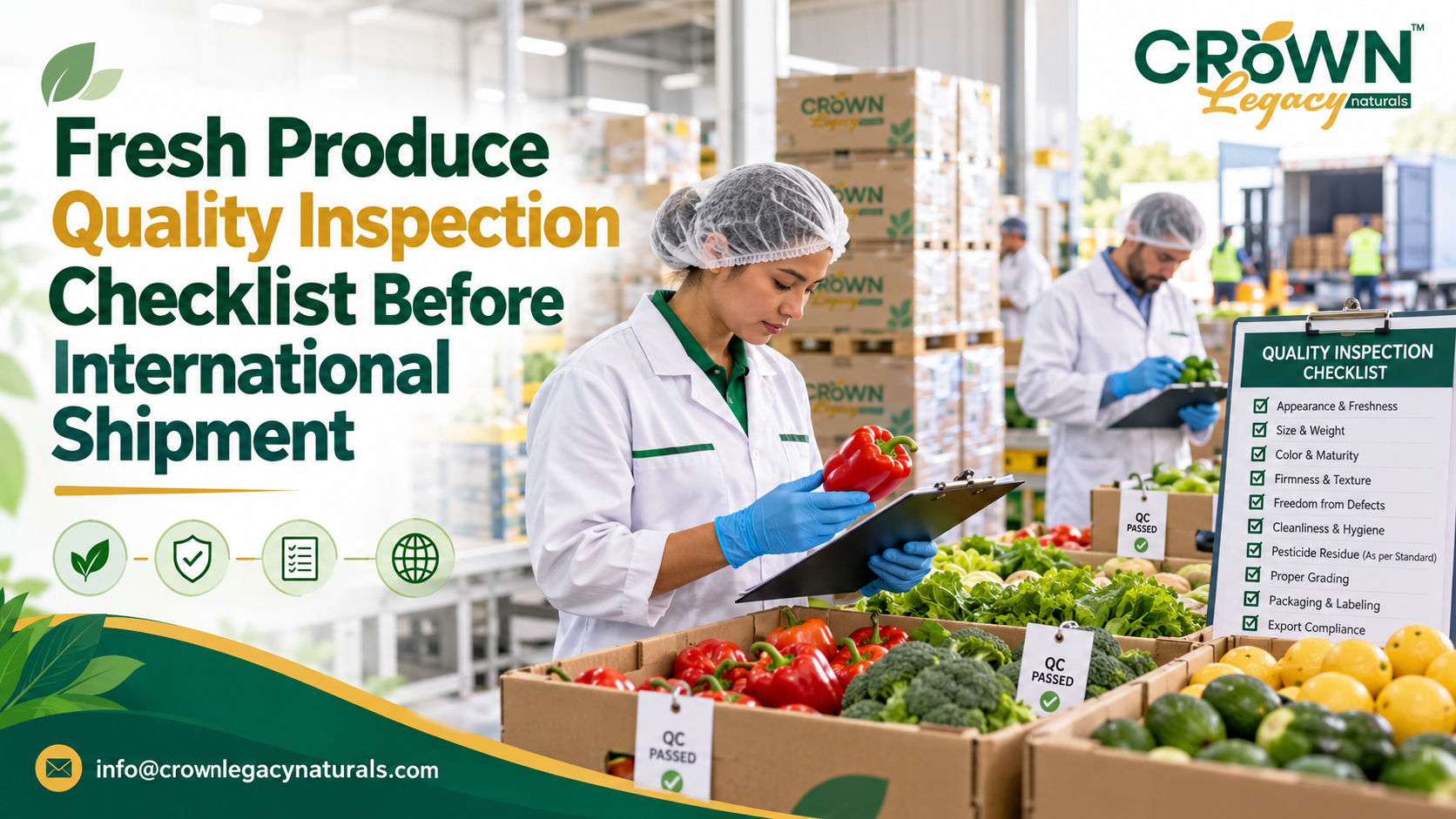
A Fresh Produce Quality Inspection Checklist helps exporters and international buyers verify fruits and vegetables before shipment. The checklist should cover appearance, freshness, size, maturity, physical defects, cleanliness, packaging, labeling, quantity, and applicable destination requirements. Completing these checks before dispatch helps ensure the shipment matches the agreed product specifications.
What Should a Fresh Produce Quality Inspection Checklist Include?
A Fresh Produce Quality Inspection Checklist should cover the key characteristics that determine whether fruits and vegetables are suitable for international shipment.
A practical inspection should check:
- Product identity and variety
- Freshness
- Appearance
- Color and maturity
- Size and weight
- Firmness and texture
- Physical damage
- Signs of decay or spoilage
- Cleanliness
- Foreign matter
- Insects or pest damage
- Packaging condition
- Labeling
- Quantity and weight
- Destination-specific requirements
The exact inspection criteria should be based on the product specification agreed between the buyer and exporter.
Why Is Quality Inspection Important Before International Shipment?
A fresh produce quality checklist helps buyers and exporters identify problems before the shipment leaves the country of origin.
Fresh fruits and vegetables can change during transportation because of handling, temperature, humidity, and transit time. Inspecting the shipment before dispatch gives the parties an opportunity to identify visible quality issues and confirm whether the produce matches the agreed specifications.
A pre-shipment inspection can help verify:
- Product quality
- Quantity
- Grade and size
- Packaging
- Visible defects
- Shipment readiness
- Buyer specifications
What Are the Key Fresh Produce Quality Standards to Check?
Fresh produce quality standards should be defined according to the specific fruit or vegetable, buyer requirements, destination market, and applicable regulations.
1. Product Identity and Variety
Confirm that the shipment contains the correct:
- Fruit or vegetable
- Variety
- Grade
- Product specification
- Intended market
This is especially important when several varieties have similar appearance but different commercial characteristics.
2. Freshness
Check whether the produce appears fresh and suitable for the intended shipment.
Look for:
- Fresh appearance
- Appropriate firmness
- No excessive shriveling
- No obvious deterioration
- No signs of spoilage
Freshness requirements can vary significantly between products.
3. Color and Maturity
The color and maturity level should match the buyer’s agreed specification.
For products that continue to ripen after harvest, the appropriate maturity stage may depend on the expected transportation and delivery timeline.
4. Size and Weight
Check whether the produce falls within the agreed size or weight range.
Depending on the product, inspection may involve:
- Individual weight
- Size category
- Length
- Diameter
- Count per package
- Weight per carton
5. Appearance
The produce should be visually assessed for characteristics such as:
- Shape
- Color
- Surface condition
- Uniformity
- Overall presentation
Appearance requirements should be established before shipment so that the exporter and buyer are working from the same expectations.
Fresh Fruit and Vegetable Quality Inspection Checklist
Inspection Area | What to Check |
Variety | Correct fruit variety |
Size | Agreed size or count |
Color | Appropriate color development |
Maturity | Suitable maturity stage |
Firmness | Appropriate firmness |
Appearance | Uniform and acceptable appearance |
Damage | Cuts, bruises, cracks or other physical damage |
Spoilage | No visible decay or deterioration |
Cleanliness | Free from excessive dirt or foreign matter |
Pest Damage | No unacceptable visible pest damage |
Packaging | Suitable and undamaged packaging |
The exact fresh produce quality inspection criteria should be adapted to the fruit and vegetable being exported.
How Do Fresh Produce Export Quality Standards Affect Inspection?
Fresh produce export quality standards help establish the quality characteristics that need to be considered when preparing produce for an international market.
Depending on the product and destination, these requirements may address:
- Product quality
- Grade
- Size
- Maturity
- Appearance
- Tolerances for defects
- Cleanliness
- Pest or disease concerns
- Packaging
- Labeling
- Plant-health requirements
Vegetable Exporters and buyers should verify the requirements applicable to the specific product and destination rather than assuming that one standard applies to every shipment.
What Are the Fruit and Vegetable Export Quality Standards to Check?
Fruit and Vegetable export quality standards can vary by fruit, destination, and buyer specification.
Before shipment, buyers and exporters should consider:
- Correct variety
- Appropriate maturity
- Size and grade
- Acceptable appearance
- Firmness
- Freedom from unacceptable damage
- Absence of visible decay
- Cleanliness
- Packaging condition
- Destination-specific requirements
For example, the acceptable maturity level for a fruit may depend on how long it is expected to remain in transit before reaching the buyer.
Therefore, fruit and vegetable export quality standards should be discussed before harvesting, packing, and shipment preparation.
Fresh Produce Quality Checklist Before Packing
The fresh produce quality checklist should be used before final packing as well as during the final fruit shipment inspection.
Product Checklist
- Correct product
- Correct variety
- Required grade
- Required size
- Suitable maturity
- Appropriate color
- Acceptable firmness
- Good overall appearance
Defect Checklist
- No unacceptable bruising
- No significant cuts
- No major cracks
- No visible decay
- No excessive shriveling
- No unacceptable pest damage
- No excessive dirt or foreign matter
Packaging Checklist
- Correct packaging type
- Packaging is clean
- Packaging is undamaged
- Correct quantity per package
- Correct net and gross weight
- Required labels are present
How Crown Legacy Naturals Approaches Fresh Produce Quality
Crown Legacy Naturals connects international buyers with fresh fruits and vegetables sourced from India. Buyers can communicate their product specifications, quality expectations, quantity, packaging preferences, and destination requirements before confirming an order.
Using a clear Fresh Produce Quality Inspection Checklist allows buyers and exporters to establish the expected quality characteristics and review the shipment against those requirements before dispatch.
Conclusion
A Fresh Produce Quality Inspection Checklist gives international buyers and exporters a structured way to review produce before shipment. Checking product identity, freshness, maturity, size, appearance, physical condition, packaging, quantity, labeling, and applicable quality requirements can help identify discrepancies before the fresh produce leaves the origin market.
The specific fresh produce quality standards, fruit export quality standards, and vegetable export quality standards should always be confirmed according to the product, buyer specifications, and destination-country requirements.
Crown Legacy Naturals helps international buyers explore fresh fruit and vegetable sourcing options from India while allowing product and quality requirements to be discussed before shipment.