
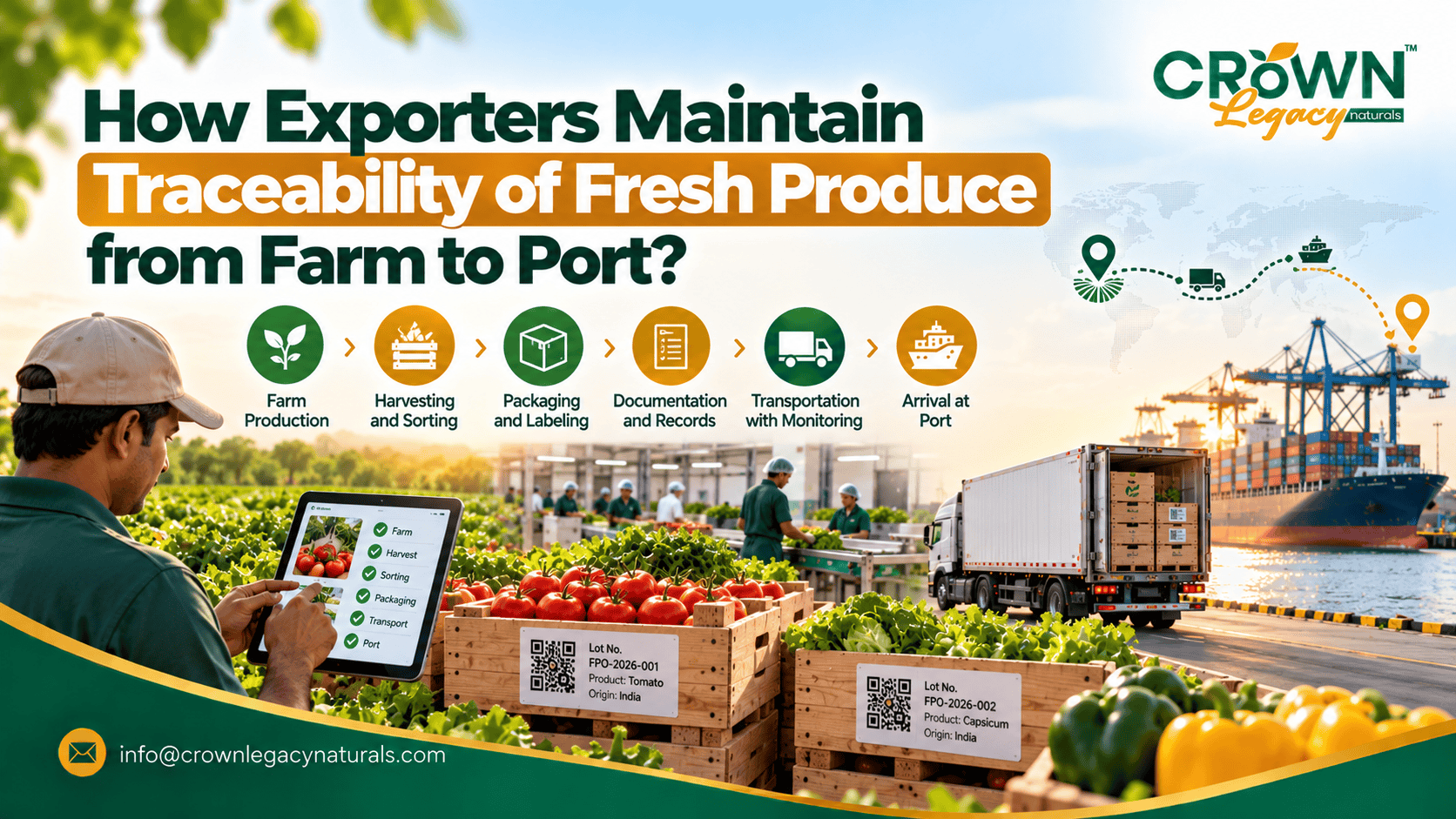
Fresh produce traceability from farm to port allows exporters and buyers to track fruits and vegetables through sourcing, handling, packing, inspection, documentation and transportation. Exporters maintain traceability by recording farm and supplier details, assigning identifiable batches, retaining quality and testing records, and linking shipment documents to the produce being exported.
What Is Fresh Produce Traceability?
Sourcing Fresh produce traceability is the ability to identify where fruits and vegetables originated, how they were handled, and which supply chain stages they passed through before reaching the buyer. For international shipments, fresh produce traceability from farm to port connects farm-level information with packing, inspection, certification and export shipment records.
Unlike a simple shipment tracking number, traceability focuses on the identity and history of the produce itself. A logistics tracking number may show where a container is located, while a traceability record helps establish which farm or supplier provided the produce, which lot it belonged to, and what quality-related records are associated with it.
For example, an importer purchasing Indian mangoes may need to establish the orchard or sourcing location, harvest or procurement details, packing lot, applicable laboratory reports and export documentation. When these records are connected, the importer can verify the consignment more efficiently and identify the source of a concern if a quality issue occurs.
Traceability can operate through paper registers, spreadsheets, digital databases or dedicated traceability platforms. The important factor is not simply whether a digital system is used, but whether records are accurate, consistent, retrievable and linked to the correct produce lot.
Why Is Traceability in Fresh Produce Exports Important?
Traceability in fresh produce exports helps exporters demonstrate product origin, investigate quality complaints, support applicable regulatory checks and provide importers with clearer shipment information. Since fruits and vegetables are perishable and may pass through several handlers, reliable records help establish which produce was supplied, what checks were performed and where a potential problem originated.
International buyers may need traceability information for supplier approval, internal quality procedures, customer enquiries or import-market compliance. Exporters also benefit because a documented supply chain can reduce confusion when multiple products, farms or packing lots are handled within the same shipment.
How Does Fresh Produce Traceability from Farm to Port Work?
Fresh produce traceability from farm to port works by linking records created at each stage of the export process to a unique lot or consignment identity. Farm sourcing details are connected to procurement records, packing information, quality checks, applicable certificates and transport documents, allowing the exporter to follow the produce through the supply chain.
The exact process varies by product, destination market, buyer requirements and the applicable export procedure. However, the following stages illustrate how traceability can be maintained for a typical Indian fresh produce shipment by fresh fruit exporter.
1. Farm Registration and Supplier Identification
Traceability begins by identifying the farm, orchard, grower or supplier from which the produce is sourced. Records may include the supplier’s identity, farm location, product variety, registration details where applicable and the information required under the relevant export programme.
For products and destinations covered by specific registration schemes, exporters must follow the prescribed procedures. Supplier identification is particularly important when produce is sourced from multiple farms, as it helps maintain a clear connection between the original source and the exported lot.
2. Harvesting and Procurement Records
After the source has been identified, exporters or their supply chain partners maintain the available harvest and procurement information. Depending on the operation, this may include harvest date, quantity received, product variety, supplier reference and receiving inspection details.
These records help distinguish one incoming batch from another. For example, two deliveries of okra received on different dates should not become indistinguishable simply because they are packed in similar cartons. Their source and receiving records should remain identifiable throughout the subsequent handling process.
3. Packing and Batch Identification
At the packing stage, the produce is associated with a lot number or another suitable identification reference. The exporter or packhouse records details such as the product, quantity, packing date, packaging type and the source lots used, according to the applicable process.
Batch identification is a central part of fresh produce traceability from farm to port because it connects physical cartons or packages with the records that describe them. If multiple source lots are combined, the relationship between the original lots and the resulting packed lot should be documented wherever required.
4. Inspection, Testing and Certification
Exporters arrange the inspections, laboratory testing and certification applicable to the product and destination. Records may include inspection findings, test reports, grading information and phytosanitary documentation where required.
These documents should be associated with the correct lot or consignment. A certificate or laboratory report is useful only when the exporter and buyer can establish which product, batch or shipment it covers. Requirements differ by commodity and destination, so exporters should confirm the relevant procedure before dispatch.
5. Shipment Preparation and Port Handover
Before dispatch, the exporter checks that the packing details, consignment information and supporting documents are consistent. Carton quantities, product descriptions, lot references and shipment identifiers should match the relevant records and documents wherever applicable.
When the cargo moves to the port, transport and dispatch information can be linked to the consignment. This provides continuity between the produce’s recorded history and its movement towards the destination market. Traceability records should remain accessible even after the shipment leaves the exporter’s premises.
What Should a Fresh Produce Traceability System Record?
A fresh produce traceability system should capture enough consistent information to identify the product’s source, follow its movement through handling and packing, and retrieve the records associated with the final consignment. The required fields depend on the commodity, destination, export scheme and buyer agreement, but the system should maintain clear links between the source, lot and shipment.
A practical system may contain the following information:
Record category | Examples of information |
Product identity | Product name, variety, grade or size specification where applicable |
Source details | Farm, orchard, grower or supplier reference |
Procurement | Date received, quantity and incoming lot identification |
Packing details | Packing date, packaging type, packed quantity and batch number |
Quality records | Inspection results, quality observations and applicable test reports |
Compliance documents | Relevant certificates, declarations and approvals |
Shipment details | Consignment reference, dispatch date, destination and transport documentation |
Record history | Corrections, responsible parties and dates of record updates |
Not every vegetable export requires every field listed above. Exporters should use the applicable regulatory requirements and buyer specifications to determine which records are mandatory and which provide additional operational value.
The most important principle is record linkage. A list of supplier names, inspection reports and shipping documents does not provide complete traceability if there is no reliable way to determine which record belongs to which batch or consignment.
What Are the Traceability Requirements for Fresh Produce Exports?
Traceability requirements for fresh produce exports depend on the importing country’s regulations, the product being shipped, the applicable certification programme and the buyer’s contractual specifications. Exporters should confirm the required farm or supplier records, testing, inspection, packaging identification and documents before the consignment is prepared rather than applying one universal checklist to every shipment.
For example, one destination may require specific phytosanitary documentation, while another product or market may have additional requirements relating to residue monitoring, registered farms or approved packhouses. Certain buyer programmes may also request details beyond the minimum official documentation.
Exporters can use the following planning checklist to identify the records that need confirmation before shipment:
- Product and destination: Confirm the commodity-specific rules and destination requirements.
- Farm or supplier: Check whether source registration or an approved supplier arrangement is required.
- Testing and inspection: Establish which tests, inspections or quality checks apply.
- Packaging and identification: Verify the required labels, lot references and packaging specifications.
- Certificates and declarations: Confirm which official documents must accompany the shipment.
- Document consistency: Reconcile product descriptions, quantities, lot numbers and consignment details.
- Record retention: Keep supporting records accessible for the period required by applicable rules or contractual arrangements.
The checklist is a planning aid, not a substitute for official requirements. Exporters should consult the relevant authorities, destination-market guidance and buyer specifications because requirements may change or vary by commodity.
How Is Traceability Maintained During Storage and Transportation?
Fresh produce traceability from farm to port must continue after packing, when the goods are stored, loaded and transferred between logistics providers. Exporters maintain continuity by linking the packed lot to dispatch documents and recording relevant handovers, storage or transport information, and shipment identifiers wherever required.
Traceability records and temperature monitoring serve different purposes. A lot reference identifies the produce and connects it to its history, while temperature records help assess the conditions under which it was stored or transported. When both are available and linked appropriately, they can provide a clearer picture of the shipment’s handling history.
How Crown Legacy Naturals Helps Buyers Source Fresh Produce from India?
International buyers sourcing fresh fruits and vegetables from India need clear communication about product specifications, sourcing, packaging and shipment documentation. Crown Legacy Naturals connects international buyers with Indian fresh produce, helping them discuss their product and order requirements before moving forward with a sourcing enquiry.
Buyers interested in mangoes, bananas, grapes, pomegranates, guavas, lychees, tender coconuts and a range of fresh vegetables can discuss their requirements directly with the business. For each proposed order, importers should confirm the relevant product specifications, available sourcing information, packing arrangements and documentation required for their destination market.
When evaluating a supplier, buyers can also ask how lots are identified, which shipment records are available and how applicable inspection or certification documents are linked to the consignment. These questions help establish whether the supplier’s recordkeeping approach aligns with the buyer’s operational and compliance needs.
Conclusion
Fresh produce traceability from farm to port connects the origin of fruits and vegetables with the records created during procurement, packing, inspection, certification and shipment. Reliable lot identification and consistent documentation help exporters and importers verify product information, investigate quality concerns and meet applicable traceability requirements.
A fresh produce tracking system is most useful when records remain accurate, accessible and connected across the supply chain. By confirming destination-specific requirements, maintaining source-to-shipment links and checking documentation before dispatch, exporters can make traceability more dependable for international produce trade.