
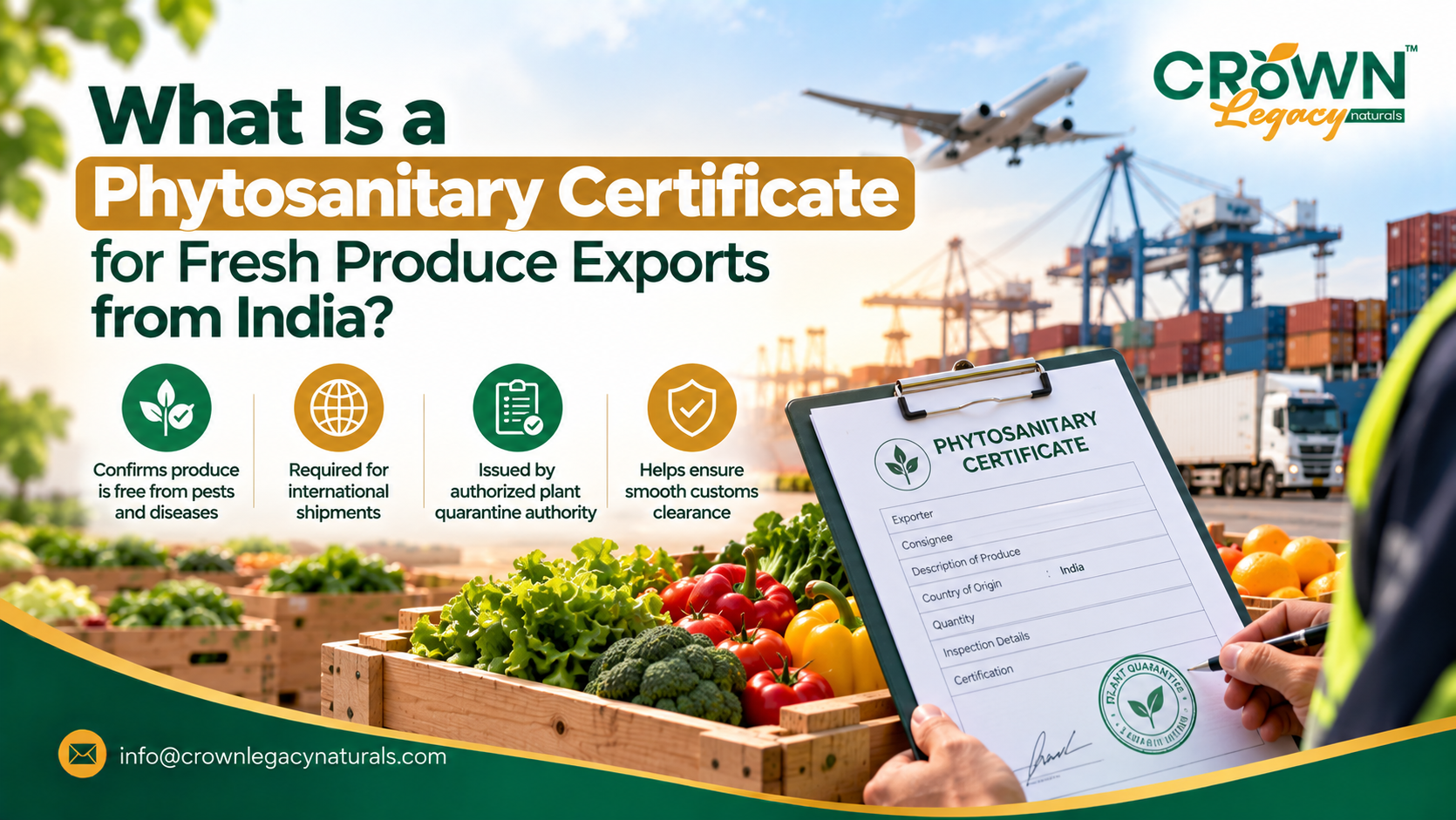
A phytosanitary certificate for fresh produce exports from India is an official plant health document issued by the authorised plant protection authority after the required inspection and procedures. It certifies that a plant or plant product shipment meets the applicable phytosanitary requirements of the importing country. For international buyers and Indian exporters, this document helps address plant pest and disease risks during cross-border trade in fresh fruits and vegetables.
What Is a Phytosanitary Certificate?
A phytosanitary certificate is an official document used in international trade to confirm that regulated plants and plant products meet specified plant health requirements. It helps importing countries manage the risk of pests and diseases entering through agricultural shipments.
For fresh produce exports, the certificate may be required for particular fruits, vegetables, and other plant products depending on the destination country’s regulations.
A phytosanitary certificate for fresh produce exports from India is not simply a general quality certificate. It addresses plant health and applicable phytosanitary conditions rather than guaranteeing taste, freshness, shelf life, or overall commercial quality.
Why Is a Phytosanitary Certificate Important for Fresh Produce?
Fresh fruits and vegetables may carry regulated pests, insects, or plant diseases. Importing countries establish plant health controls to reduce these risks and protect their agriculture and ecosystems.
A phytosanitary certificate helps the relevant authorities assess whether a shipment meets the applicable import conditions. Without required documentation, a shipment may face inspection delays, additional treatment requirements, rejection, or other regulatory action.
Why Is a Phytosanitary Certificate Required for Fresh Produce Exports from India?
A phytosanitary certificate for fresh produce exports from India may be required when the destination country’s plant health regulations specify it for the product being imported. Requirements differ according to the commodity, country, origin, and any special import conditions.
The certificate can help buyers and importers:
- Demonstrate compliance with applicable plant health requirements.
- Support import clearance procedures.
- Address pest and disease control requirements.
- Provide official documentation for regulated produce.
- Reduce the risk of documentation-related shipment problems.
However, the certificate does not automatically guarantee entry into the destination country. Import permits, additional declarations, treatments, inspections, or other documents may also be required.
Who Issues a Phytosanitary Certificate in India?
In India, phytosanitary certification is handled through the plant quarantine system under the Directorate of Plant Protection, Quarantine & Storage (DPPQS), Ministry of Agriculture and Farmers Welfare. Authorised officials assess applications and carry out the required certification procedures according to applicable plant health requirements.
Exporters may also come across the term plant quarantine certificate India when researching export documentation and plant health procedures. In India, phytosanitary certification is handled through the authorised plant quarantine system. The required application, inspection, and certification procedures depend on the produce and destination country’s import conditions. Exporters should confirm the applicable requirements through the Plant Quarantine Management System before dispatch.
What Information Does a Phytosanitary Certificate Contain?
A phytosanitary certificate for fresh produce exports from India contains information that identifies the shipment and supports the official plant health declaration.
Depending on the applicable certificate format and requirements, information may include:
- Exporter’s name and address
- Consignee’s details
- Description of the produce
- Botanical name of the plant or product
- Quantity and package details
- Country or place of origin
- Declared transport method and point of entry
- Inspection or treatment details, where applicable
- Additional declarations required by the importing country
- Official certification and authorisation details
The International Plant Protection Convention’s ISPM 12 provides the international guidance for preparing and issuing phytosanitary certificates.
Accurate shipment details matter because inconsistencies between the certificate, invoice, packing list, and physical consignment can complicate clearance.
How to Obtain a Phytosanitary Certificate for Fresh Produce Exports from India?
The process for obtaining a phytosanitary certificate for fresh produce exports from India depends on the commodity, destination country, and applicable plant health requirements. Exporters should confirm the requirements before arranging the final shipment.
Step 1: Check the importing country’s requirements
Confirm whether the destination requires a phytosanitary certificate, import permit, specific pest declarations, or prescribed treatments for the selected produce.
Step 2: Prepare the application and supporting documents
Prepare accurate product, exporter, consignee, quantity, origin, and destination details, along with the supporting documents required for fresh produce export by the relevant authority.
Step 3: Arrange inspection or treatment if required
The authorised plant quarantine official determines the applicable inspection, sampling, testing, or treatment procedures based on the relevant requirements.
Step 4: Obtain the certificate
The certificate can be issued when the consignment satisfies the applicable certification requirements. Exporters should allow sufficient time for the required procedures.
Step 5: Verify the shipment details before dispatch
Check that the certificate details match the actual consignment and that any additional documentation required by the importing country is available.
India’s Plant Quarantine Management System provides online phytosanitary certification services. Certain fresh horticultural exports may also be covered by APEDA’s HortiNet system, depending on the commodity and applicable export programme.
What Is a Phytosanitary Certificate for Fruit Export?
A phytosanitary certificate for fruit export confirms that the fruit consignment meets the applicable plant health requirements of its destination market. Requirements can differ by fruit species, country of origin, destination, and the pests regulated by the importing authority.
For example, an exporter shipping mangoes may need to meet different plant health conditions from an exporter shipping grapes or pomegranates.
What Should Fruit Exporters Check Before Applying?
Fruit exporters should verify:
- Whether the destination requires a phytosanitary certificate
- Whether the fruit variety is permitted for import
- Whether an import permit or market-access protocol applies
- Whether pest-specific inspection or treatment is required
- Whether additional declarations must appear on the certificate
- Whether the fruit must meet specific traceability or programme requirements
A phytosanitary certificate for fruit export does not replace other applicable requirements, such as residue testing, food safety controls, grading specifications, or commercial export documentation.
For certain fresh fruit exports, APEDA’s HortiNet system supports certification and traceability processes for specified commodities and markets. Exporters should verify whether the relevant fruit and destination fall within the applicable programme.
What Is a Phytosanitary Certificate for Vegetable Export?
A phytosanitary certificate for vegetable export is an official plant health document used when the destination country’s regulations require certification for the vegetable shipment. The requirements depend on the vegetable, destination market, origin, and relevant quarantine risks.
Fresh vegetables exports may be subject to specific controls concerning insects, plant diseases, soil, weed seeds, or other regulated pests and materials.
What Should Vegetable Exporters Verify?
Before dispatching vegetables internationally, exporters should check:
- Product-specific import eligibility
- Required inspection and sampling procedures
- Applicable pest declarations
- Any mandatory treatment or additional documentation
- Packaging and consignment identification requirements
- Certificate details against the final shipment
The requirements for okra, green chillies, drumsticks, or other vegetables may differ by destination. A phytosanitary certificate for vegetable export should therefore be arranged against the actual product and importing country’s requirements rather than assumed to follow one universal procedure.
How Crown Legacy Naturals Supports International Fresh Produce Buyers
Crown Legacy Naturals connects international buyers with fresh fruits and vegetables sourced from India. When planning a purchase, buyers should clarify the destination market, product, quantity, and expected shipment schedule early in the sourcing process.
These details help establish which product-specific import requirements need to be checked before an order proceeds. Buyers and exporters should confirm the applicable phytosanitary and other regulatory requirements with the relevant authorities before shipment.
Conclusion: Phytosanitary Certificate for Fresh Produce Exports from India
A phytosanitary certificate for fresh produce exports from India plays an important role in international trade by documenting compliance with applicable plant health requirements. Whether shipping fruit or vegetables, exporters need to confirm the destination’s rules, prepare accurate documentation, and arrange any required inspection or treatment before dispatch.
For international buyers, understanding these requirements early can help with procurement planning and reduce the risk of avoidable shipment complications.
Crown Legacy Naturals helps international buyers explore fresh produce sourcing options from India based on their product, quantity, and destination requirements.