
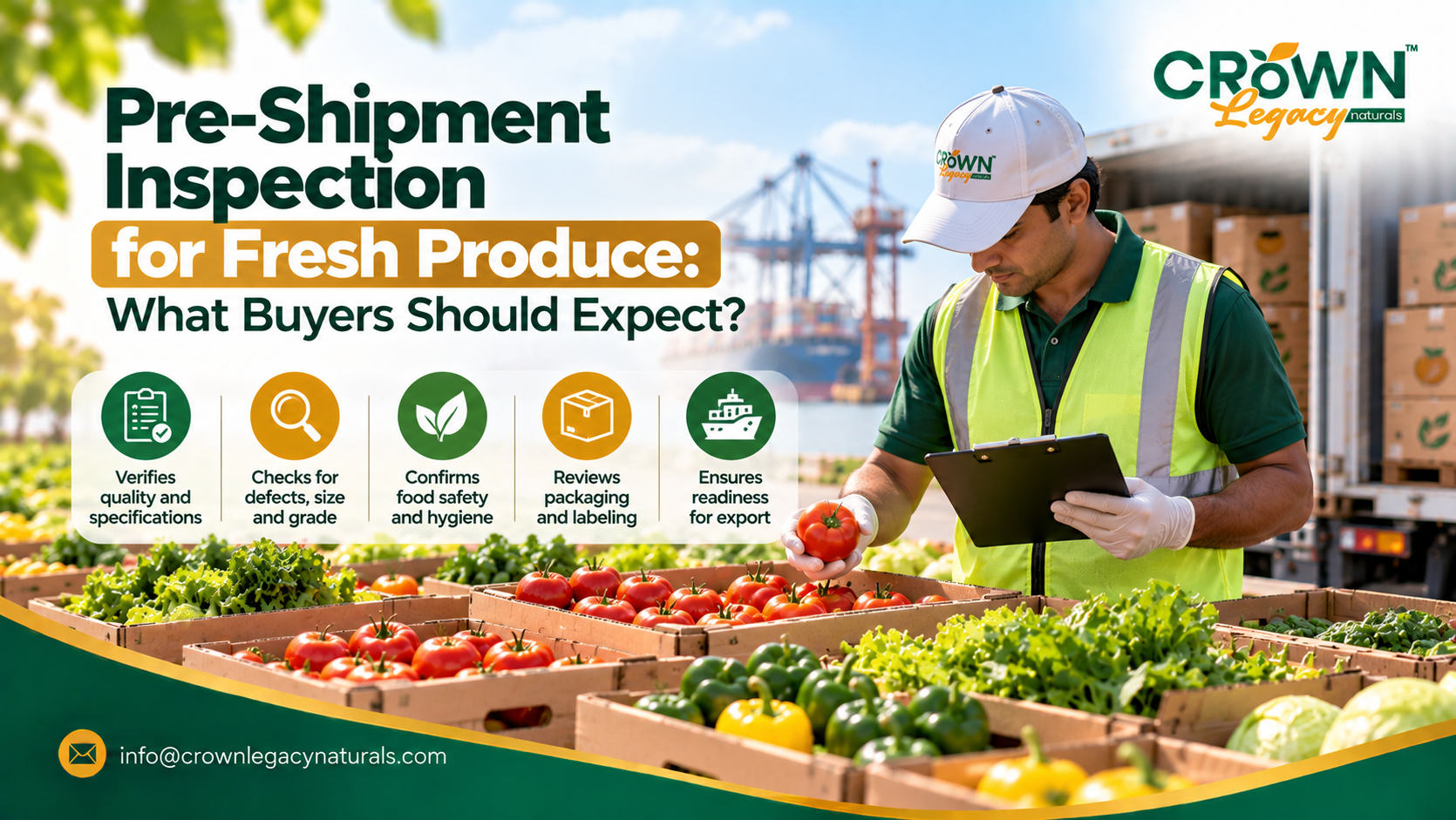
Pre-shipment inspection for fresh produce helps importers assess the quality, condition, packaging, quantity, and documentation of fruits and vegetables before dispatch. It can identify visible defects, inconsistent grading, packaging issues, and potential compliance gaps before goods leave the exporting country. The inspection scope depends on the product, buyer specifications, destination requirements, and terms agreed between the buyer and exporter.
What Is Pre-Shipment Inspection for Fresh Produce?
Pre-shipment inspection for fresh produce is a quality assessment carried out before a fruit or vegetable shipment is dispatched to the buyer. It helps determine whether the produce meets agreed specifications for appearance, maturity, size, packaging, quantity, and other relevant quality parameters.
For international buyers, this process provides an opportunity to identify concerns before the shipment enters the transportation and import process. Fresh produce can be sensitive to handling, temperature, and transit delays, so checking its condition before dispatch can help buyers make better-informed purchasing decisions.
A pre-shipment inspection may be conducted by the buyer’s inspection team, an independent inspection company, or another agreed party. The scope should be established before inspection begins.
Common inspection areas include:
- Product variety and origin details.
- Appearance, colour, maturity, and visible defects.
- Size grading and consistency.
- Signs of pest damage, decay, or physical injury.
- Packing quantity, carton condition, and labelling.
- Shipment quantity and relevant documentation.
- Applicable export and destination-market requirements.
An inspection report records the findings against the agreed criteria. It should not be treated as a guarantee that every fruit or vegetable will remain in perfect condition throughout transportation.
Why Is Pre-Shipment Inspection Important for Fresh Produce Export?
Pre-shipment inspection is important because fresh produce can deteriorate or become unsuitable for sale if quality problems go unnoticed before dispatch. A structured inspection helps buyers evaluate whether a shipment matches their requirements and whether visible issues need to be addressed before loading.
1. Helps Identify Quality Problems Before Dispatch
Fresh fruits and vegetables may have bruising, cuts, discolouration, decay, uneven maturity, or other defects. These issues can affect product appearance, usable quantity, shelf life, and acceptance by distributors or retailers.
An inspection allows the buyer or appointed inspector to check representative samples and record visible quality concerns. Where the findings do not meet agreed specifications, the parties can discuss sorting, replacement, repacking, or other corrective actions before dispatch.
2. Reduces the Risk of Shipment Disputes
Disagreements can arise when the buyer and exporter interpret quality requirements differently. For example, they may have different expectations regarding fruit size, acceptable blemishes, maturity, or the proportion of defective produce.
Documented inspection criteria help establish a common reference point. Photographs, sampling records, and inspection findings can also support communication between the parties if a concern arises.
3. Checks Packaging and Shipment Quantity
The inspection may include carton condition, packing configuration, labels, net weight, and the quantity prepared for shipment. These checks help identify discrepancies between the purchase order and the goods ready for dispatch.
Packaging should be suitable for the product and expected transport conditions. However, a visual packaging check alone does not prove that cartons will withstand every handling or stacking condition during international shipping.
4. Supports Fresh Produce Export Compliance Checks
Fresh produce export compliance checks help buyers and exporters review whether the shipment’s documentation, product details, and applicable inspection requirements are in order. Depending on the destination and commodity, requirements may involve phytosanitary certification, import permits, additional declarations, treatment records, or other documents.
The exact requirements vary by product and importing country. A pre-shipment inspection does not automatically replace mandatory plant health inspections, laboratory tests, or official certification required by the relevant authorities.
What Does Quality Inspection Before Fruit Export Include?
Fresh Produce Quality inspection before fruit export generally focuses on the fruit’s appearance, maturity, size, grading, physical condition, and conformity with the buyer’s specifications. The inspection criteria should reflect the fruit variety, intended market, transport duration, and commercial requirements agreed before the order is packed.
1. Fruit Appearance and Freshness
Inspectors may examine the fruit for visible signs of freshness, including colour, surface condition, firmness where appropriate, and general appearance. They may also record bruising, cuts, shrivelling, discolouration, or visible decay.
Acceptable appearance depends on the fruit and buyer requirements. A small surface blemish may be acceptable under one specification but unacceptable under another, particularly for premium retail orders.
2. Size, Weight, and Grading
Fruit grading helps determine whether produce meets the buyer’s required size or weight range. Inspectors may check representative samples for consistency and compare them with the agreed grade specifications.
Buyers should define the required size categories, acceptable tolerances, and packing weight before the inspection. This is particularly important when produce will be sold in standardised retail packs or supplied to buyers with specific grading requirements.
3. Maturity and Ripeness
Maturity requirements vary according to the fruit type and the expected journey. Some fruits are harvested at a stage that allows them to ripen during transportation, while others require a different maturity profile for their intended market.
An inspection may involve visual maturity indicators and, where specified, additional measurements or tests. The appropriate method depends on the commodity and the buyer’s requirements.
4. Visible Pest Damage and Defects
Inspectors may look for visible pest damage, abnormal marks, decay, and other defects that could affect acceptance. However, visual inspection cannot reliably detect every pest, pathogen, or internal quality problem.
Where destination regulations require official plant health inspection or specific testing, those requirements must be handled through the appropriate process rather than relying solely on a general commercial inspection.
What Does Quality Inspection Before Vegetable Export Include?
Quality inspection before vegetable export checks whether vegetables meet agreed requirements for freshness, appearance, size, maturity, cleanliness, and packing condition. Because vegetables vary widely in shape, texture, moisture content, and susceptibility to damage, the inspection criteria should be tailored to each product.
1. Freshness, Colour, and Texture
Inspectors may assess whether vegetables have the expected colour, firmness, and overall appearance. Signs such as wilting, shrivelling, excessive moisture, discolouration, or decay may indicate a quality concern.
The appropriate freshness indicators differ by vegetable. For example, leafy or tender produce may require different checks from firm vegetables such as okra, green chillies, or drumsticks.
2. Size and Product Uniformity
Vegetable grading may include length, diameter, weight, or other measurements relevant to the product. Uniformity can be important for wholesale distribution, retail presentation, and buyer-specific packing formats.
Importers should specify the required size range and acceptable variation before packing begins. This helps inspectors determine whether the sampled goods match the intended grade.
3. Visible Damage and Contamination
Quality checks may identify cuts, bruises, broken portions, pest damage, soil, or foreign material, depending on the vegetable and agreed inspection scope. Findings should be recorded against the buyer’s acceptance criteria.
Commercial quality inspection and food safety testing are not the same. Where laboratory analysis, residue testing, or other food safety checks are required, these should be arranged separately through suitable procedures.
4. Packing Condition and Quantity
The inspection may confirm that vegetables are packed in the agreed cartons, bags, or other packaging formats and that the shipment quantity matches the purchase order. Packaging should support the product’s handling and transportation needs without creating unnecessary pressure or restricting suitable airflow.
What Happens During a Pre-Export Inspection for Fresh Produce?
A pre-export inspection for fresh produce typically follows an agreed process: reviewing specifications, selecting samples, examining the goods, checking packing and quantity, reviewing relevant documents, and recording the results. The exact sequence depends on the inspection provider, product, buyer requirements, and any official procedures that apply.
Step 1: Review the purchase order and specifications
The inspector reviews the product type, quantity, grade, size, packing requirements, acceptable defects, and other criteria agreed between the buyer and exporter.
Step 2: Select representative samples
Samples are selected according to the agreed sampling approach. The inspection should represent the goods being assessed as closely as practical; checking a small number of cartons may not reveal every problem in a large shipment.
Step 3: Inspect quality and grading
The inspector checks the selected samples for visible defects, maturity, size, freshness, and conformity with the relevant product specifications.
Step 4: Check packaging and shipment details
Cartons, labels, packing configuration, and shipment quantity are reviewed against the agreed requirements. Temperature records or other checks may also be reviewed if included in the inspection scope.
Step 5: Review applicable documents
Relevant documents are checked for consistency with the shipment details. Any mandatory official inspection, certification, or testing requirement must also be addressed through the appropriate authority or service provider.
Step 6: Prepare the inspection report
The report records the inspection scope, findings, discrepancies, and relevant evidence. The buyer and exporter can then decide whether the shipment meets the agreed acceptance criteria or needs corrective action.
What Quality Standards Should Buyers Set Before Inspection?
Buyers should establish written quality standards before inspection so that the exporter and inspector have a consistent basis for evaluating the shipment. Broad instructions such as “fresh,” “good quality,” or “export grade” may be insufficient unless they are supported by measurable criteria and clear acceptance limits.
The agreed specifications can cover:
- Product identity: Fruit or vegetable type, variety, and origin.
- Size and grade: Required measurements, weight ranges, and permitted variation.
- Appearance: Acceptable colour, maturity, surface condition, and visible defects.
- Defect tolerances: Permitted levels of bruising, decay, damage, or other defects.
- Packing details: Carton dimensions, packing quantity, labels, and net weight.
- Inspection method: Sampling approach, inspection location, and timing.
- Acceptance criteria: Conditions under which the shipment passes, requires corrective action, or needs further assessment.
- Documentation: Records and certificates required for the transaction and destination.
How Crown Legacy Naturals Supports International Fresh Produce Buyers?
Crown Legacy Naturals connects international buyers with fresh fruits and vegetables sourced from India. For importers, clear communication about product specifications, packing requirements, shipment quantities, and destination-market expectations helps establish a stronger foundation for a purchase.
Before confirming an order, buyers can discuss their preferred produce, required grading, packing format, and relevant documentation needs. These details help align expectations between the buyer and exporter and clarify which inspection arrangements should be confirmed before dispatch.
The inspection scope and any mandatory certifications should always be agreed according to the specific product, destination, and transaction.
Conclusion
Pre-shipment inspection for fresh produce helps buyers assess product quality, grading, packaging, shipment quantity, and relevant documentation before dispatch. Quality inspection before fruit export and quality inspection before vegetable export should follow clear, product-specific criteria rather than relying on general descriptions of freshness or export quality.
By defining acceptance standards, arranging suitable inspections, and confirming fresh produce export compliance checks in advance, importers can identify potential issues earlier and make better-informed purchasing decisions.
Crown Legacy Naturals helps international buyers explore fresh produce sourcing options from India and discuss product and packing requirements as part of the sourcing process.