
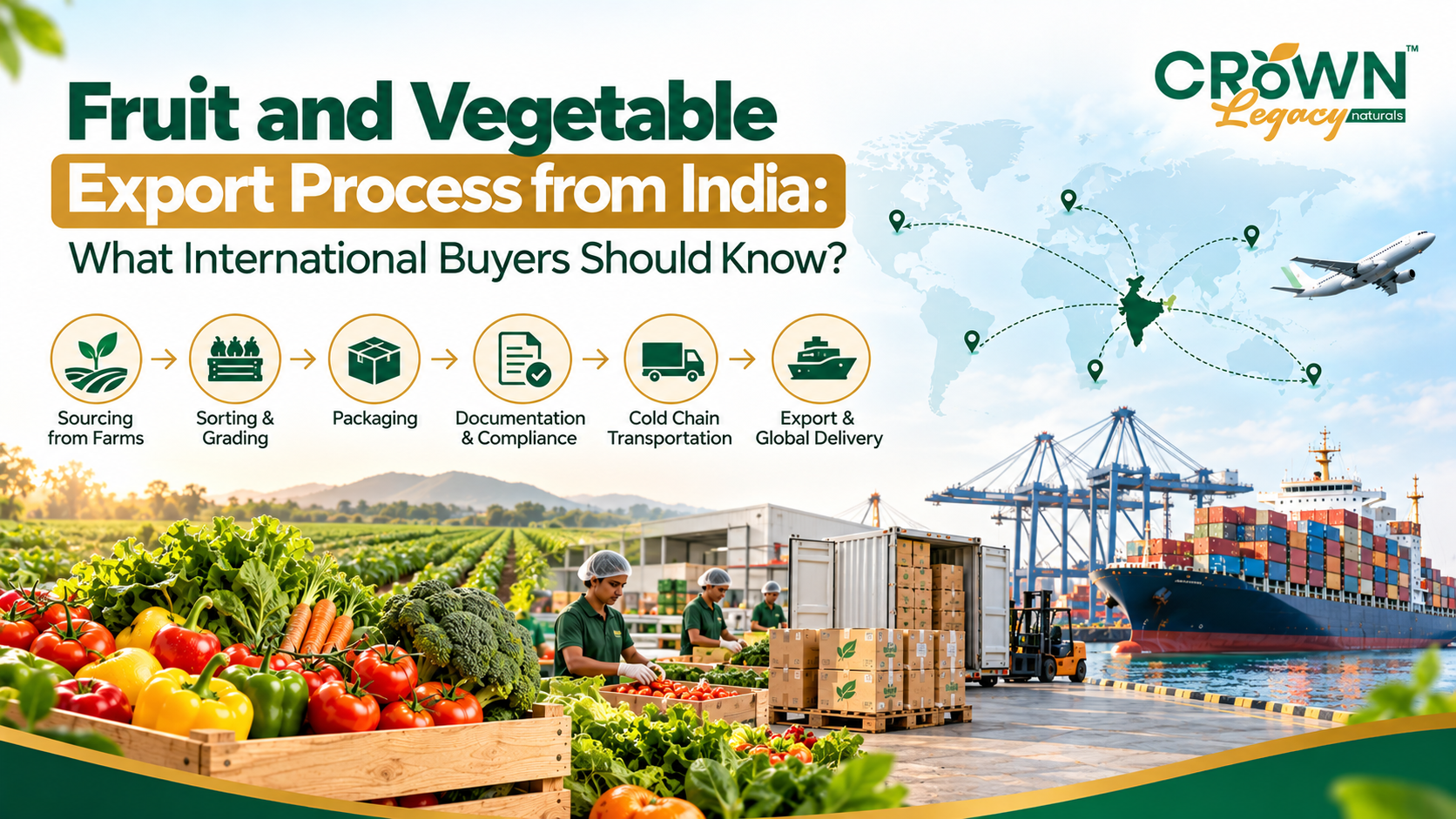
The fruit and vegetable export process from India involves several stages, including product selection, supplier verification, quality inspection, documentation, packaging, customs clearance, shipping, and delivery. For international buyers, understanding each stage helps them plan orders, evaluate exporters, prepare required information, and reduce avoidable delays in fresh produce shipments.
What Is the Fruit and Vegetable Export Process from India?
The fruit and vegetable export process from India is the sequence of activities followed to move fresh produce from Indian farms and suppliers to international buyers. While the exact requirements can vary by destination country and product, the process generally includes:
- Product and variety selection
- Exporter and supplier selection
- Product specifications and order confirmation
- Quality inspection and grading
- Packaging and labeling
- Export documentation
- Customs and regulatory procedures
- Shipment and logistics coordination
- Destination-country clearance
- Delivery to the buyer
Understanding these stages gives international buyers a clearer view of what happens between placing an order and receiving fresh produce.
What Are the Main Steps in the Fruit and Vegetable Export Process from India?
The fruit and vegetable export process from India can be understood through the following buyer-focused stages.
1. Select the Fruits or Vegetables and Define Requirements
The process starts with the buyer defining exactly what they want to import.
International buyers should confirm:
- Fruit or vegetable type
- Variety
- Grade and quality
- Size and maturity
- Required quantity
- Packaging format
- Expected shelf life
- Destination country
- Delivery schedule
For example, a buyer sourcing mangoes may need to specify the preferred variety, size range, maturity stage, packaging, and expected arrival condition.
Clear product specifications help the fruit exporter understand the order and identify suitable sourcing options.
2. Find and Evaluate an Indian Exporter
The next step is choosing an exporter capable of supplying the required produce.
Buyers can compare exporters based on:
- Product range
- Sourcing capabilities
- Quality-control procedures
- Export experience
- Supply capacity
- Packaging options
- Destination-market experience
- Commercial terms
- Communication and order coordination
The exporter should be able to clearly explain how the fresh produce will be sourced, prepared, inspected, packaged, and shipped.
3. Confirm Product Availability and Commercial Terms
Once an exporter is shortlisted, the buyer and exporter discuss the order requirements.
This usually involves confirming:
- Product and variety
- Quantity
- Price
- Packaging
- Shipment schedule
- Delivery terms
- Payment terms
- Quality specifications
- Required documents
At this stage, buyers should ensure that the agreed specifications are clearly documented before production, procurement, or packing begins.
How Does the Fruit Export Process from India Work?
The fruit export process from India follows the same broad structure but may involve product-specific requirements related to variety, maturity, grading, treatment, packaging, and shelf life.
A typical fruit export process from India includes:
Fruit selection → sourcing → quality checking → grading → packing → documentation → customs procedures → shipping → destination clearance → delivery
For perishable fruits, timing is particularly important because the product needs to maintain acceptable quality throughout transportation.
The exporter and buyer should therefore coordinate the expected harvesting, packing, dispatch, transit, and delivery schedules.
How Does the Vegetable Export Process from India Work?
The vegetable export process from India also begins with product specifications and supplier coordination before moving through quality checks, packing, documentation, customs procedures, shipping, and delivery.
A typical vegetable export process from India includes:
Product selection → sourcing → inspection → grading → packing → documentation → customs clearance → shipment → destination clearance → delivery
Vegetables can have different handling and shelf-life requirements, so the exporter needs to prepare the shipment according to the characteristics of the specific product.
Buyers should communicate requirements such as size, grade, freshness, packaging, quantity, and expected arrival condition before confirming the order.
What Happens During the Fresh Produce Export Process in India?
The fresh produce export process India involves coordinating product sourcing with quality control, packaging, documentation, and logistics.
Product Sourcing
The exporter arranges the required fruits or vegetables from suitable Indian sources based on the buyer’s specifications.
Quality Inspection
The produce is checked against the agreed requirements. Depending on the product and destination, this can include checks related to:
- Appearance
- Size
- Grade
- Freshness
- Maturity
- Physical condition
- Packaging requirements
Grading and Packing
Produce is sorted and prepared according to the agreed specifications before being packed for transportation.
Documentation
The required export and shipment documents are prepared according to the transaction and destination-market requirements.
Customs and Regulatory Procedures
The shipment goes through the required Indian export procedures before departure.
International Transportation
After export clearance, the shipment is transported to the destination market using the agreed logistics arrangement.
This complete fresh produce export process India requires coordination between the exporter, buyer, logistics providers, customs authorities, and other parties involved in the shipment.
How Does the Fruit Export Shipping Process from India Work?
The fruit export shipping process India requires careful coordination because fruits are perishable products.
A typical shipping sequence is:
- Produce is sourced and prepared.
- Quality and packaging requirements are checked.
- Export documentation is completed.
- Required customs procedures are completed.
- The shipment is handed over for transportation.
- The shipment travels to the destination market.
- Import procedures and destination clearance are completed.
- The shipment is delivered to the buyer or agreed destination.
The specific shipping method depends on factors such as product characteristics, destination, quantity, transit requirements, and commercial arrangements.
How Does the Vegetable Export Shipping Process from India Work?
The vegetable export shipping process India follows a similar sequence but the handling requirements depend on the vegetable being shipped.
Before shipment, buyers and exporters should agree on:
- Packaging specifications
- Quantity
- Product grade
- Dispatch schedule
- Transportation method
- Expected transit period
- Delivery location
- Required documentation
The vegetable export shipping process India should be planned around the product’s characteristics so that the shipment reaches the destination according to the agreed specifications.
What Should International Buyers Check Before the Shipment?
Before the shipment moves forward, buyers should verify the details agreed with the exporter.
Buyer Check | What to Confirm |
Product | Variety, grade, size and specifications |
Quantity | Ordered and confirmed quantity |
Quality | Agreed quality requirements |
Packaging | Format, size and labeling |
Documentation | Required export/import documents |
Shipping | Transport method and schedule |
Destination | Port, airport or delivery location |
Commercial terms | Price, payment and delivery terms |
This final verification helps reduce misunderstandings during the fruit and vegetable export process from India.
What Factors Can Affect the Fresh Produce Export Process India?
Several factors can influence the timing and execution of the fresh produce export process India, including:
Product Availability
Seasonality and local availability can affect whether the required product and variety can be sourced at a particular time.
Destination Requirements
Import regulations and documentation requirements can differ between countries. Buyers should communicate destination-specific requirements before confirming the shipment.
Product Shelf Life
Fresh fruits and vegetables have limited shelf life, making shipment planning important.
Packaging Requirements
Packaging needs can vary according to the product, transportation method, handling requirements, and buyer specifications.
Logistics and Transit
The selected transportation route and expected transit time can affect the shipment schedule.
For these reasons, international buyers should discuss product, documentation, packaging, and logistics requirements with the exporter before placing a confirmed order.
How Crown Legacy Naturals Supports Fresh Produce Buyers?
Crown Legacy Naturals connects international buyers with fresh fruits and vegetables sourced from India. For buyers planning to source Indian produce, understanding the export process helps them communicate their product specifications, quantity, destination, packaging preferences, and delivery requirements more effectively.
Whether sourcing fruits or vegetables, buyers can use the export-process checklist to prepare their requirements and discuss suitable sourcing options with Crown Legacy Naturals.
Conclusion
The fruit and vegetable export process from India involves more than simply purchasing fresh produce and arranging transportation. International buyers need to coordinate product specifications, sourcing, quality checks, packaging, documentation, customs procedures, shipping, and destination delivery with the exporter.
Understanding the fruit export process from India, vegetable export process from India, and overall fresh produce export process India gives buyers a clearer framework for planning international purchases and communicating their requirements.
Crown Legacy Naturals helps international buyers explore fresh fruit and vegetable sourcing options from India based on their product, quantity, destination, and specifications.