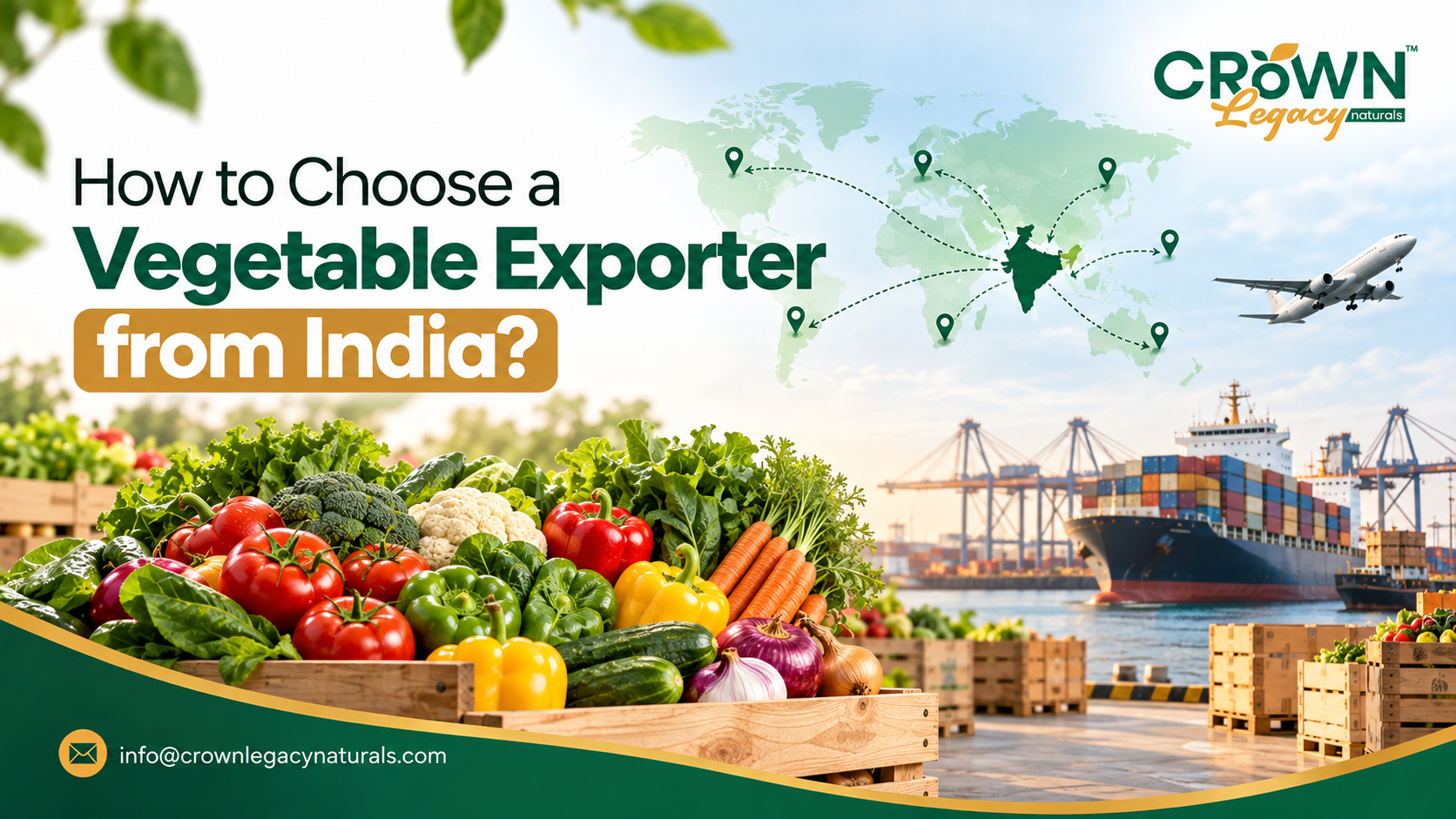
Choosing a vegetable exporter from India requires buyers to evaluate vegetable quality, sourcing capabilities, supply consistency, export experience, packaging, certifications, pricing, and ability to meet required quantities. Importers should compare multiple suppliers using the same criteria, verify product specifications, assess their sourcing network, and consider a sample or trial order before establishing a long-term supply relationship.
What Should Buyers Check When Choosing a Vegetable Exporter from India?
Buyers should first evaluate whether the vegetable exporter from India can consistently provide the required vegetables, quality grades, quantities, packaging, and supply schedules.
The lowest price should not be the only deciding factor. A suitable exporter should be able to demonstrate that it has dependable sourcing, appropriate quality-control practices, relevant export experience, and the capacity to fulfil recurring orders.
Before shortlisting suppliers, evaluate:
- Vegetable varieties and grades
- Sourcing regions
- Product quality
- Seasonal availability
- Export experience
- Supply capacity
- Certifications and compliance
- Packaging standards
- Pricing and commercial terms
- Previous international market experience
- Communication and order support
The objective is to identify an exporter that matches your specific purchasing requirements rather than simply finding a company that ships vegetables internationally.
How Can Buyers Evaluate Indian Vegetable Exporters?
When comparing Indian vegetable exporters, buyers should determine whether the supplier has relevant experience with the vegetables, quantities, and destination markets they require.
Export experience can indicate familiarity with international buyer specifications, seasonal sourcing, product preparation, packaging, and shipment planning.
Ask potential suppliers:
- Which vegetables do you export regularly?
- Which varieties and grades are available?
- Which countries do you currently supply?
- What quantities can you supply?
- Which regions do you source from?
- Do you handle recurring wholesale orders?
- Can you provide product specifications?
- Can you arrange samples before a larger order?
The most relevant experience is experience that matches your actual requirement. An exporter specializing in one type of vegetable may have a different sourcing capability from an exporter handling a broad range of fresh produce. Buyers should consider the Indian Fruit & Vegetable Import Calendar before closing the deal.
How Should Buyers Compare Vegetable Export Companies in India?
When comparing vegetable export companies in India, buyers should compare product specifications and overall supply capabilities rather than looking at quoted prices alone.
Create a shortlist and request the same basic information from each supplier. This makes it easier to identify differences in quality, sourcing, quantity, packaging, pricing, and availability.
What Product Information Should Buyers Request?
Ask each shortlisted exporter for:
- Vegetable name and variety
- Origin or sourcing region
- Grade
- Size
- Average weight where applicable
- Seasonal availability
- Expected quantity
- Packaging format
- Minimum order quantity
- Product specifications
This information allows buyers to make a like-for-like comparison.
For example, two suppliers may quote different prices for the same vegetable because they are offering different grades, sizes, packaging formats, or quality specifications.
How Can Buyers Evaluate Indian Fresh Vegetable Suppliers?
When evaluating Indian fresh vegetable suppliers, buyers should examine how the supplier sources its produce and whether that sourcing network can support consistent quality and availability.
A supplier with dependable relationships across farming regions may be better positioned to fulfil recurring requirements than one that sources vegetables only after receiving an order.
Ask:
- Where are the vegetables sourced?
- Which farming or production regions do you work with?
- Do you source directly from farmers or through established supply networks?
- How are vegetables selected for export?
- How is consistency between batches maintained?
- Can you supply the same specifications for recurring orders?
Understanding the sourcing process helps buyers assess whether the supplier has the infrastructure and relationships required for ongoing international supply.
Why Is the Sourcing Region Important?
The sourcing region can affect availability, seasonal supply, vegetable characteristics, and purchasing schedules.
For example, different regions may have different harvesting periods or production strengths. Buyers should therefore ask exporters about the normal availability period of the vegetables they want to import.
A supplier that can clearly explain its sourcing and seasonal supply can help buyers plan their procurement more effectively.
How Can Buyers Check Vegetable Quality Before Choosing an Exporter?
A vegetable exporter from India should be able to explain how vegetables are selected, graded, inspected, and prepared before export.
Rather than relying on descriptions such as “premium quality,” buyers should request specific product standards.
Important quality factors may include:
- Freshness
- Size
- Grade
- Appearance
- Colour
- Firmness
- Uniformity
- Defect tolerance
- Cleanliness
- Product consistency
Buyers should ask the exporter what specifications are followed and how those specifications are checked before the vegetables are prepared for shipment. The Export Document Checklist is also very important in checking the quality of vegetables.
Should Buyers Request Vegetable Samples?
Yes. When practical, requesting a sample can help buyers evaluate the actual product before placing a larger order.
A sample can help assess:
- Vegetable freshness
- Size consistency
- Appearance
- Quality
- Packaging
- Product presentation
A sample does not replace supplier verification, but it provides buyers with an opportunity to compare the physical product with the specifications provided by the exporter.
How Can Buyers Evaluate Wholesale Vegetable Exporters India?
For buyers sourcing in larger quantities, wholesale vegetable exporters India should be evaluated according to their ability to maintain supply at the required volume and quality.
A supplier may successfully fulfil a small initial order but have difficulty maintaining larger or recurring quantities. Buyers should clarify supply capacity before establishing a long-term relationship.
Ask about:
- Minimum order quantity
- Regular supply capacity
- Seasonal availability
- Weekly or monthly volumes
- Available varieties
- Grade options
- Recurring order capacity
- Ability to scale supply when required
Distributors, wholesalers, supermarket suppliers, and other large-volume buyers should communicate their expected purchasing volume and frequency in advance.
This allows the exporter to determine whether its sourcing network can support the buyer’s requirements.
How Can Buyers Evaluate Vegetables Import Export Capabilities?
Understanding Vegetables import export capabilities is important when selecting a supplier for international sourcing.
Buyers should determine whether the exporter regularly handles international vegetable orders and understands the requirements associated with overseas markets.
Ask potential suppliers:
- Which international markets do you serve?
- Which vegetables do you regularly export?
- What quantities do you typically handle?
- Which packaging formats are available?
- What export markets have you supplied previously?
- Can you support destination-specific buyer requirements?
The purpose is not simply to establish whether the company exports vegetables, but whether its Vegetables import export experience aligns with your specific destination, product, and order requirements.
How Can Buyers Verify the Reputation of Vegetable Export Companies in India?
Before selecting one of the vegetable export companies in India, buyers should verify the information provided by shortlisted suppliers.
Useful checks include:
- Reviewing company information
- Checking product and sourcing details
- Asking about export experience
- Reviewing relevant certifications
- Requesting product specifications
- Asking about previous international markets
- Requesting references where appropriate
- Considering a sample or trial order
Be cautious when an exporter makes broad claims but cannot provide specific information about its vegetables, sourcing, quality standards, or supply capacity.
A transparent supplier should be able to answer reasonable buyer questions and provide information that allows an importer to assess the proposed supply relationship.
What Questions Should Buyers Ask a Vegetable Exporter?
Asking consistent questions makes it easier to compare potential suppliers.
Which vegetables do you export regularly?
Confirm that the exporter regularly handles the vegetables you need rather than simply listing them as available products.
Where are your vegetables sourced?
Understanding sourcing regions can help buyers evaluate availability and seasonal supply.
What grades and sizes can you supply?
Request specific product specifications so different suppliers can be compared accurately.
What quantity can you supply regularly?
This is particularly important for wholesalers, distributors, retailers, and other buyers with recurring requirements.
Can you provide samples?
Samples can help buyers evaluate actual vegetable quality and packaging before placing a larger order.
Which international markets do you serve?
This can help buyers understand whether the exporter has relevant experience with overseas customers.
How do you maintain vegetable quality?
Ask how the exporter selects, grades, checks, and prepares vegetables before shipment.
How do you handle quality concerns?
Understand the process for addressing situations where supplied vegetables do not meet the agreed specifications.
How Can Buyers Shortlist a Vegetable Exporter from India?
The most practical approach is to evaluate every shortlisted supplier using the same criteria.
For each vegetable exporter from India, assess:
- Relevant export experience — Does the exporter understand your product and destination market?
- Vegetable quality — Can it consistently meet your required specifications?
- Sourcing network — Does it have dependable access to the vegetables you require?
- Supply capacity — Can it fulfil your expected order volume?
- Certifications — Are relevant certifications available and verifiable?
- Packaging — Can the exporter meet your packaging requirements?
- Pricing — Is the quotation competitive for the specified product?
- Communication — Does the supplier provide clear and timely information?
- Sample or trial order — Does the actual product match the agreed specifications?
- Long-term suitability — Can the supplier support recurring purchasing requirements?
Using the same criteria for every supplier makes the selection process more structured and reduces the risk of choosing based only on price or promotional claims.
How Should Buyers Make the Final Choice?
The final selection should be based on how closely each supplier matches the buyer’s actual requirements.
A suitable vegetable exporter from India should demonstrate appropriate product quality, dependable sourcing, relevant export experience, consistent supply capacity, suitable packaging, transparent commercial terms, and clear communication.
Rather than asking which supplier offers the lowest price, buyers should ask:
Which exporter can consistently provide the vegetables, quality, quantity, specifications, and supply schedule my business requires?
That question keeps the selection process focused on long-term sourcing suitability.
Conclusion
Choosing a vegetable exporter from India should be based on more than price or product availability. Buyers need to compare quality, sourcing strength, export experience, supply capacity, certifications, packaging, commercial terms, and the supplier’s ability to meet recurring requirements. A structured comparison, supported by product specifications and a sample or trial order where appropriate, can help buyers establish a dependable vegetable sourcing relationship.
Crown Legacy Naturals supplies fresh vegetables sourced from India for international buyers looking for consistent produce and export-oriented sourcing. By clearly defining your vegetable requirements and evaluating suppliers against the same criteria, you can make the sourcing process more structured and identify an exporter that aligns with your market and purchasing needs..