
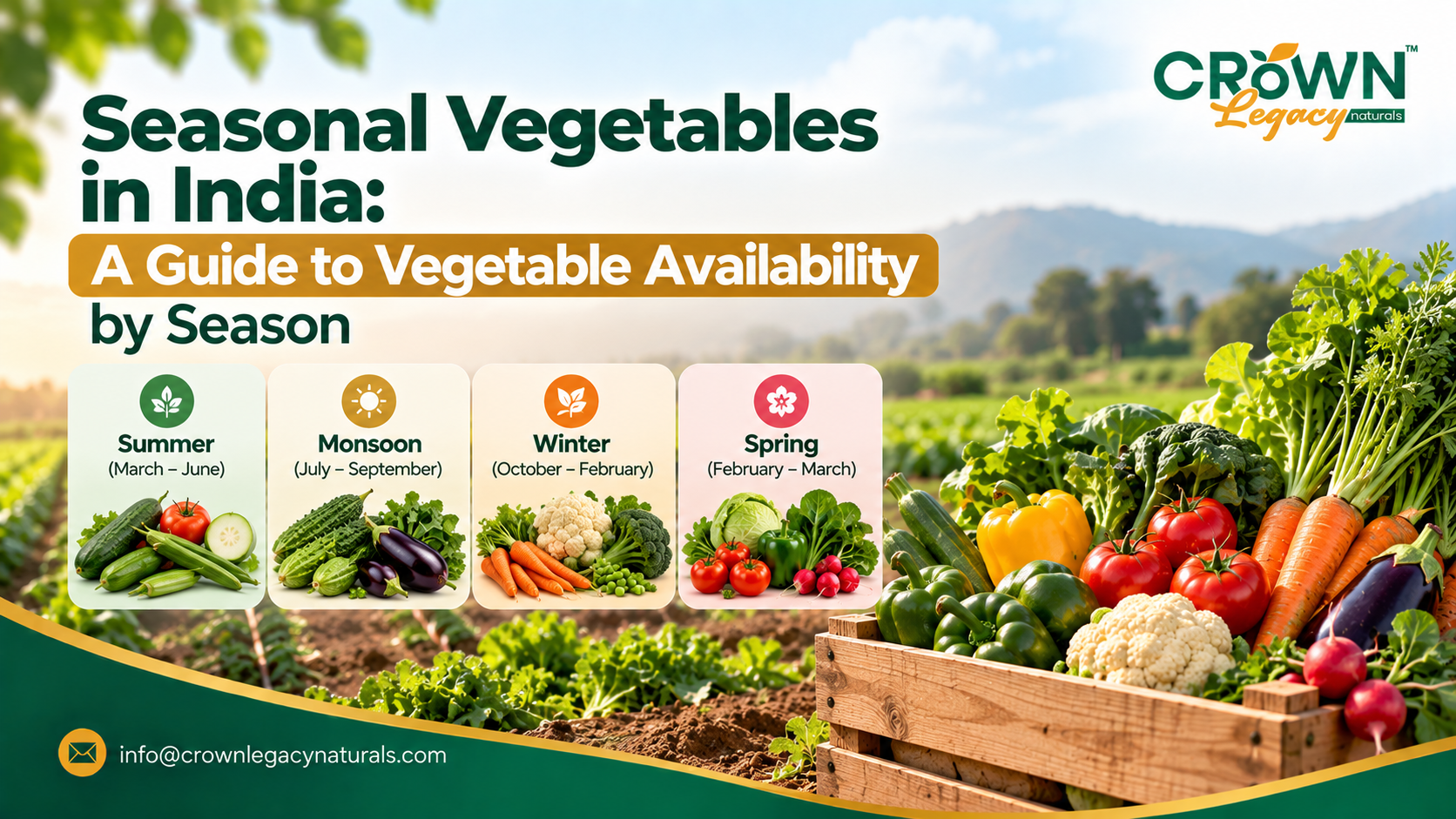
Seasonal Vegetables in India vary throughout the year based on regional climate, growing conditions, crop cycles, and vegetable varieties. Winter typically brings vegetables such as cauliflower, peas, carrots, and spinach, while summer supports crops such as okra, gourds, and cucumber. Understanding these patterns helps international buyers plan sourcing, availability, and shipment schedules.
What Are Seasonal Vegetables in India?
Seasonal vegetables are crops that grow more naturally and abundantly during particular periods of the year. India’s varied climate allows different regions to produce vegetables across multiple seasons.
For international buyers, understanding Seasonal Vegetables exporter in India can help with:
- Planning purchase schedules
- Identifying suitable sourcing periods
- Comparing seasonal availability
- Planning export quantities
- Coordinating shipment schedules
- Understanding regional production differences
The availability of Indian seasonal vegetables is not identical across the country. Temperature, rainfall, soil conditions, irrigation, variety, and farming practices can all influence when a vegetable is harvested.
Indian Seasonal Vegetables: Seasonal Availability Calendar
A seasonal vegetable calendar India buyers can use as a general planning guide is shown below. Actual availability may vary by region, variety, weather, and cultivation practices.
Season | Common Seasonal Vegetables in India |
Winter | Cauliflower, cabbage, green peas, carrots, radish, spinach, beetroot, turnip |
Summer | Okra, cucumber, bottle gourd, bitter gourd, ridge gourd, pumpkin, cluster beans |
Monsoon | Gourds, okra, beans, cucumber, pumpkin, colocasia and selected leafy vegetables |
Spring | Peas, carrots, beans, spinach, cabbage, cauliflower and selected seasonal crops |
This seasonal vegetable calendar India should be treated as a general reference rather than a fixed availability schedule. Production can overlap between seasons, particularly in regions with suitable irrigation and controlled growing conditions.
Which Vegetables Are Available During Winter in India?
Winter vegetables in India include many cool-season crops that perform well under lower temperatures. This period is particularly important for buyers sourcing vegetables commonly associated with India’s cooler growing conditions.
Common winter vegetables in India include:
- Cauliflower
- Cabbage
- Green peas
- Carrots
- Radish
- Spinach
- Beetroot
- Turnip
- Fenugreek leaves
- Broccoli in suitable growing regions
Winter vegetable availability can differ between northern, western, central, and southern production areas.
What Are the Main Summer Vegetables in India?
Summer vegetables in India generally include crops that perform well under warmer conditions. Gourds, okra, cucumber, and several heat-tolerant vegetables are commonly associated with this period.
Examples of summer vegetables in India include:
- Okra
- Cucumber
- Bottle gourd
- Bitter gourd
- Ridge gourd
- Pumpkin
- Cluster beans
- Snake gourd
- Green beans in suitable regions
The exact availability of summer vegetables in India can vary considerably between production regions.
What Are the Main Monsoon Vegetables in India?
Monsoon vegetables in India are influenced strongly by rainfall, humidity, soil conditions, and regional cultivation practices.
Common examples can include:
- Okra
- Bottle gourd
- Ridge gourd
- Bitter gourd
- Pumpkin
- Cucumber
- Beans
- Colocasia
- Selected leafy vegetables
The availability of monsoon vegetables in India is particularly dependent on local weather conditions. Heavy rainfall or excessive humidity can influence crop quality, harvesting schedules, and supply volumes.
For international buyers, this makes advance planning and communication with suppliers especially important when sourcing during the monsoon period.
Why Does Vegetable Seasonality Matter to International Buyers?
Seasonality matters for vegetable exporters from India because it directly influences sourcing decisions. Knowing when particular Seasonal Vegetables in India are generally available allows buyers to plan procurement before placing large orders.
Seasonal planning can help buyers evaluate:
- Product availability
- Expected sourcing period
- Order timing
- Quantity requirements
- Shipment planning
- Destination-market demand
- Alternative production regions
For buyers sourcing Indian seasonal vegetables, seasonality should therefore be considered alongside product specifications, quality requirements, packaging, and logistics.
How Should Buyers Use a Seasonal Vegetable Calendar?
A seasonal calendar is most useful when it becomes part of the buyer’s procurement planning process.
1. Identify the Required Vegetable
Start with the specific vegetable, variety, size, grade, and expected quantity.
2. Check the General Growing Season
Use the seasonal vegetable calendar India as an initial reference to identify the likely production period.
3. Confirm the Production Region
Ask the exporter which Indian production regions are currently supplying the required vegetable.
4. Confirm Current Availability
Seasonal patterns provide guidance, but actual availability should be confirmed before finalizing an order.
5. Plan the Shipment
Consider harvesting schedules, packaging requirements, transportation time, and destination requirements when planning the shipment.
This approach makes Seasonal Vegetables in India easier to incorporate into a practical international sourcing plan.
How Crown Legacy Naturals Helps Buyers Source Seasonal Vegetables?
Crown Legacy Naturals connects international buyers with fresh vegetables sourced from India. For buyers planning around Seasonal Vegetables in India, understanding the preferred vegetable, quantity, destination, and purchasing schedule is an important starting point.
By discussing these requirements in advance, buyers can explore suitable sourcing options based on the expected seasonal availability of Indian vegetables.
Conclusion
Understanding Seasonal Vegetables in India gives international buyers a practical starting point for planning vegetable procurement throughout the year. Winter crops, summer vegetables, monsoon vegetables, and region-specific production cycles can all influence when particular products are available.
Rather than treating a seasonal calendar as a fixed schedule, buyers should use it as a planning guide and confirm current availability, production region, specifications, quantity, and shipment requirements before placing an order.
Crown Legacy Naturals helps international buyers explore fresh vegetable sourcing options from India based on their product and purchasing requirements.